1990
Origins in disability sport
The committee’s submitted history traces its beginnings to a movement promoting the rights and sporting abilities of persons with disabilities.
Profile updated 16 October 2026
Download committee profileThe Sierra Leone Paralympic Committee is the national body responsible for developing Para sport and coordinating Sierra Leone’s participation in the Paralympic Games. Its history connects disability advocacy with opportunities for athletes to train, compete and represent their country. From its origins in a disability-sport movement to participation on the Paralympic stage, the committee has worked to make sport more accessible to persons with disabilities.
According to the committee’s submitted history, the movement began in 1990 with a focus on advocating for persons with disabilities and demonstrating ability through sport. That purpose continues to inform its national role in athlete development, representation and public awareness.
Sierra Leone became an approved member of the International Paralympic Committee at the sixth IPC General Assembly in Atlanta in 1996. Its first Summer Paralympic Games appearance followed in Atlanta that year, with Kelley Marah representing the country in athletics.
The committee’s submitted history traces its beginnings to a movement promoting the rights and sporting abilities of persons with disabilities.
Sierra Leone was admitted at the sixth IPC General Assembly in Atlanta and made its Summer Paralympic debut, represented by Kelley Marah in athletics.
Sierra Leone returned to the Summer Paralympics in London, represented by Mohamed Kamara in athletics.
Athletes and administrators met in Freetown to develop a strategic plan through the Agitos Foundation’s Organisational Capacity Programme, with Unisa Deen Kargbo as the local programme lead.
George Wyndham represented Sierra Leone in the men’s singles class 4 table tennis competition.
Sorie Kargbo and Juan Faith Jackson represented Sierra Leone at the postponed Tokyo 2020 Games. George Wyndham supported the delegation as a coach.
George Wyndham competed in the men’s javelin F57 at Paris 2024, finishing 11th.
Commonwealth Sport confirmed Wyndham’s death on 22 May 2026, recognising his contribution as an athlete, mentor and advocate for inclusion.
Wyndham represented Sierra Leone in table tennis at Rio 2016 and in javelin F57 at Paris 2024. He also supported the Tokyo 2020 delegation as a coach. His legacy includes mentoring young athletes and advocating for the inclusion of persons with disabilities. Commonwealth Sport confirmed his death on 22 May 2026.
Kargbo competed in the men’s long jump T47 at Tokyo 2020, held in 2021. He finished 12th with a best jump of 5.78 metres on 31 August 2021, a documented milestone in Sierra Leone’s Paralympic participation.
Kamara has represented Sierra Leone in international Para powerlifting. The committee’s submitted history also highlights his participation in athlete-development opportunities, including GAPS programmes.
Unisa Deen Kargbo
Alexander Thullah
Mrs Zainab Suma Koroma is also named in the submitted executive record, which does not specify her portfolio.
The committee’s submitted history identifies the National Olympic Committee of Sierra Leone, the Ministry of Sports and the National Sports Authority as key institutional partners. International cooperation has also supported organisational development and opportunities for Para athletes, including the Agitos Foundation’s capacity-building programme.
13 Walpole Street, P.M. Bag 639, Freetown, Sierra Leone
FacebookThe committee history and public IPC records provide the sources for this profile.
· Para sport development
By June 2026, Gabon, Guinea-Bissau, Seychelles and Sierra Leone had hosted IPC Local Leaders courses under Sport for Mobility.
Read the archive report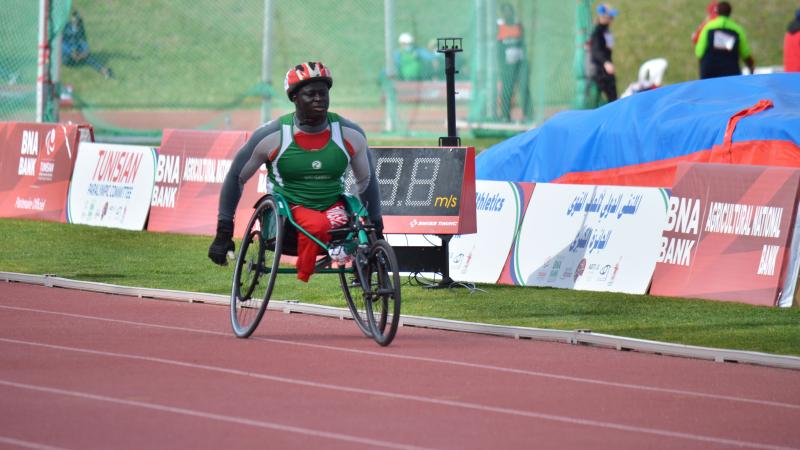
· Para athletics
At the 18–20 March 2021 Tunis Grand Prix, IPC support helped 24 athletes and 13 coaches from 13 NPCs attend.
Read the archive report· Multi-sport
Ten participants from nine countries developed plans to strengthen athletes’ voices at home.
Read the archive reportConnect with the national organisation to ask about participation, athlete development, classification and representing your country.
Connect with your NPC to find an accessible club, a first training session or a local sport opportunity.
Build an athlete pathway through coaching, equipment access, classification information and competition.
Prepare for national and continental events, with entries coordinated by your NPC and the relevant federation.